The story of Jacob and Esau is more than a sibling rivalry over a meal. It is a snapshot of two different ways to view life. Jacob was a man looking at the long term, while Esau was a man living entirely in the moment. At the center of their conflict was the “birthright.” This was a God given privilege that included the spiritual leadership of the family, a double portion of the inheritance, and the promise of being in the Messianic line of Christ.
Esau traded what he could not replace for what would not last.
Genesis 25:34, “…thus Esau despised his birthright.”
The New Testament doesn’t go easy on him for this decision. It labels his mindset as “profane,” meaning common or careless with holy things.
Hebrews 12:16, “Lest there be any fornicator, or profane person, as Esau, who for one morsel of meat sold his birthright.”
Let’s look at three things that set Esau to view short term gain better than long term blessings.
1. The Trap of Failure
(Genesis 25:29)
Esau came in from the field “faint.” He was an outdoorsman who had come home empty-handed. His failure in the field to bring back meat created frustration and physical hunger, and instead of recovering properly, he reacted. His physical exhaustion began to control his spiritual judgment.
Failure itself does not ruin a man’s future, but reacting in the flesh during that failure certainly can.
Proverbs 24:16, “For a just man falleth seven times, and riseth up again: but the wicked shall fall into mischief.”
We must not give into our flesh’s desires because of past failures.
2. The Deception of Weak Faith
(Genesis 25:32)
Esau’s response to his hunger was pure exaggeration: “Behold, I am at the point to die: and what profit shall this birthright do to me?” He wasn’t actually dying; he was just hungry. But when faith is weak, we treat temporary problems as permanent disasters.
Esau never prayed, he never asked for help, and he refused to wait. He assumed he would die instead of trusting that God could provide a meal that didn’t cost him his future.
We too must trust God enough to follow Him, even when our circumstances look bleak. This is called faith.
3. The Sin of Forgetfulness
(Genesis 25:34)
Jacob and Esau grew up in the same house, with the same parents, under the same instruction.
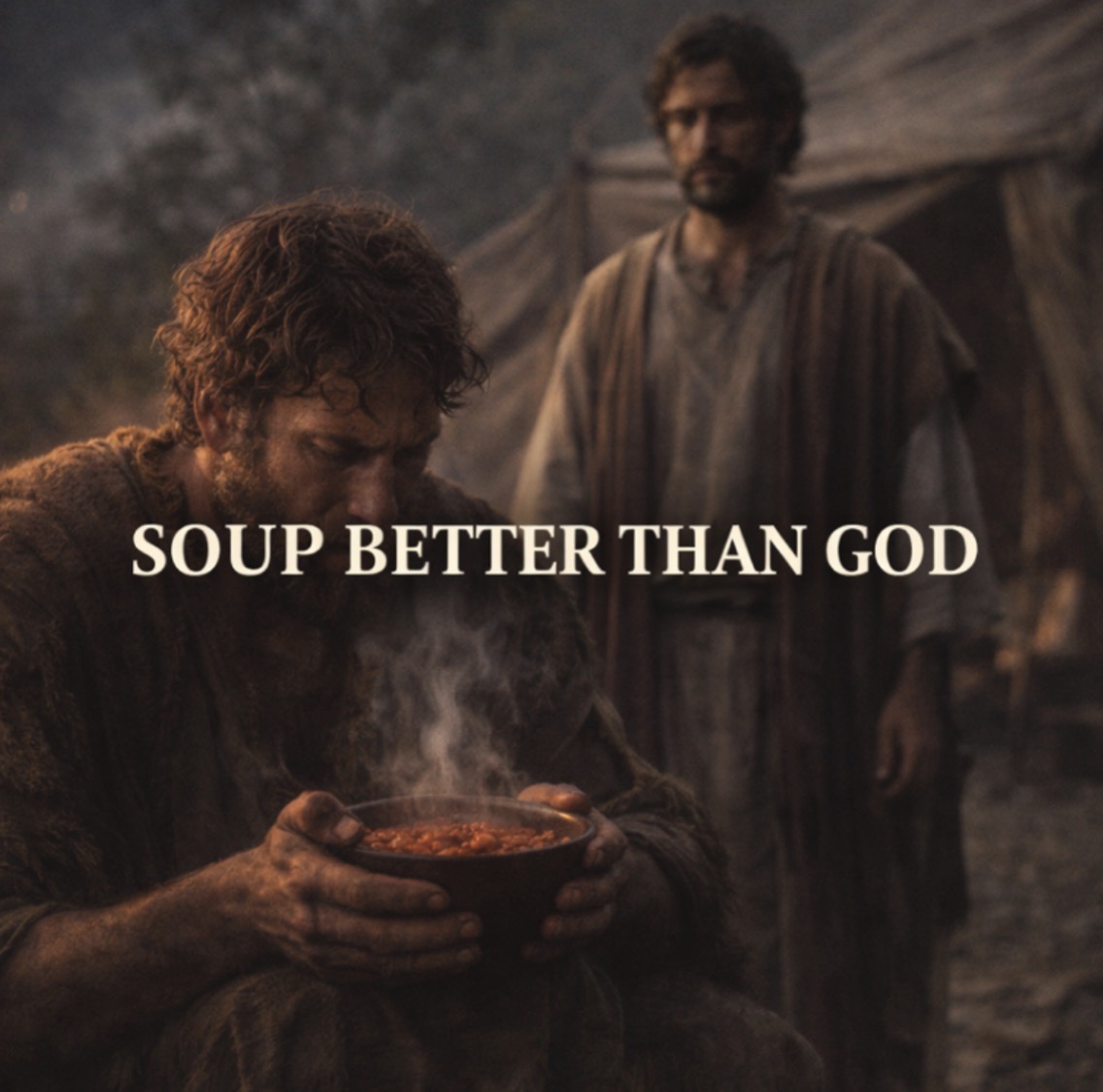
The difference was their perspective. Jacob valued the blessing because he understood what it meant. Esau “despised” it, meaning he minimized it. He forgot the value of what God had placed in his hands because he was too focused on the steam rising from a bowl of soup.
When we forget God’s benefits, we start treating holy things like they are common.
Psalm 103:2, “Bless the Lord, O my soul, and forget not all his benefits:”
Temporary appetites often scream louder than eternal promises. We all face moments where the “soup”, the immediate relief, the quick profit, or the temporary pleasure, feels more urgent than our walk with God. The danger isn’t being hungry; the danger is valuing the soup more than the Savior. What feels urgent in your life right now is rarely what is most important. Don’t sell your soul for a meal that will leave you hungry again in four hours.