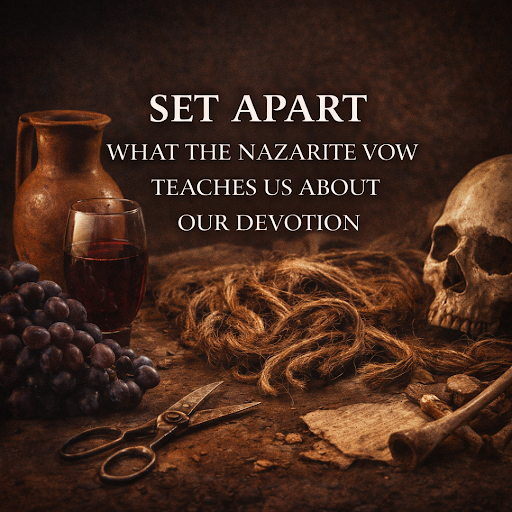
Numbers 6 opens with a choice. It wasn’t a command for everyone; but it was a door for anyone.
Numbers 6:2, “Speak unto the children of Israel, and say unto them, When either man or woman shall separate themselves to vow a vow of a Nazarite, to separate themselves unto the LORD.”
The word that stands out is separate. This was voluntary. A man or woman could choose to be set apart in a special way for God. This vow was not required of all Israel; it was entered into freely. That makes it weighty because love chooses what law cannot demand.
The Three Marks of the Nazarite
The Nazarite vow was defined by three specific restrictions. These weren’t just random rules; they were outward signs of an inward devotion.
1. No Wine or Fruit of the Vine
“He shall separate himself from wine and strong drink… neither shall he drink any liquor of grapes, nor eat moist grapes, or dried.” (Numbers 6:3)
It was not just alcohol, it was anything from the vine. Grapes were not sinful. But the Nazarite gave up even lawful pleasure. This showed restraint from delights that might dull the heart.
Some believers give up certain liberties, not because they are wicked, but because they want nothing to cloud their usefulness.
2. No Razor on the Head
“All the days of the vow of his separation there shall no razor come upon his head… he shall be holy, and shall let the locks of the hair of his head grow.” (Numbers 6:5)
The hair became the visible sign of the vow. It marked him as different because men are called to have short hair. (I Corinthians 11:14)
Verse 7 calls it “the consecration of his God upon his head.” This became a crown of shame. The head that was not shaved showed that he lived under another authority.
Samson is the most well-known example.
“For, lo, thou shalt conceive, and bear a son; and no razor shall come on his head: for the child shall be a Nazarite unto God from the womb.” (Judges 13:5)
When his hair was cut, the outward mark of his separation was gone. But his downfall did not start with scissors; it started when his heart stopped being separate.
3. No Contact with the Dead
“All the days that he separateth himself unto the LORD he shall come at no dead body.” (Numbers 6:6)
This was so strict that it even included father or mother. Death represents the curse and defilement of sin. The Nazarite was to remain clean, wholly given to God.
The Cost of a Broken Vow
If the vow was accidentally broken, if someone died suddenly next to him, the days did not count.
He had to shave his head and begin again.
That is a strong warning. God required the whole time to be kept clean. Partial obedience did not finish the vow. When the vow was finally complete, the hair was shaved and burned before the Lord.
The sign of separation was given back to God in worship. It ended where it began: at the altar.
The Ultimate Fulfillment
Jesus was from Nazareth, but He did not take the Nazarite vow under Numbers 6. He drank from the vine. He touched the dead and raised them. Yet He fulfilled what the vow pictured: Total devotion. He was completely obedient and not divided in heart.
The chapter closes with the famous priestly blessing.
“The LORD bless thee, and keep thee: The LORD make his face shine upon thee, and be gracious unto thee: The LORD lift up his countenance upon thee, and give thee peace.” (Numbers 6:24–26)
Separation unto the Lord is not empty loss. It is the path of His favor. The Nazarite vow teaches this simple truth: If you want to be fully used by God, you must be fully His.
We must be willing to suffer shame, forgo pleasures and separate from death!