2 Chronicles 7:14, “If my people, which are called by my name, shall humble themselves, and pray, and seek my face, and turn from their wicked ways; then will I hear from heaven, and will forgive their sin, and will heal their land.”
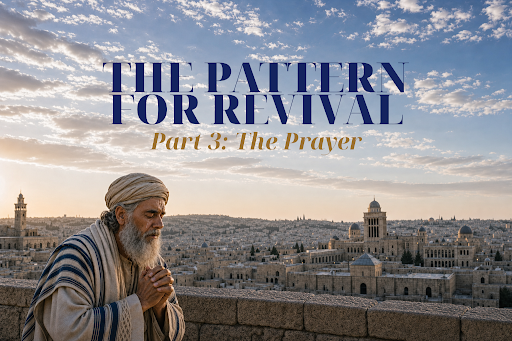
After God stirs the individual, the very next thing He produces is prayer. There has never been a revival in the history of the church that did not begin on its knees. Not one. The fire of God falls on the altar where men have first poured out their hearts.
1. Christ Was a Praying Man
If the sinless Son of God needed to pray, how much more do we?
Mark 1:35, “And in the morning, rising up a great while before day, he went out, and departed into a solitary place, and there prayed.”
Luke 6:12, “And it came to pass in those days, that he went out into a mountain to pray, and continued all night in prayer to God.”
Hebrews 5:7, “Who in the days of his flesh, when he had offered up prayers and supplications with strong crying and tears unto him that was able to save him from death, and was heard in that he feared.”
And He has not stopped.
Hebrews 7:25, “Wherefore he is able also to save them to the uttermost that come unto God by him, seeing he ever liveth to make intercession for them.”
Right now, while you are reading this, Christ is praying for you. The pattern of revival is the pattern of Christ. If He prayed, we pray.
2. The Praying Remnant Before Every Outpouring
Pentecost did not start with preaching. It started with prayer.
Acts 1:14, “These all continued with one accord in prayer and supplication, with the women, and Mary the mother of Jesus, and with his brethren.”
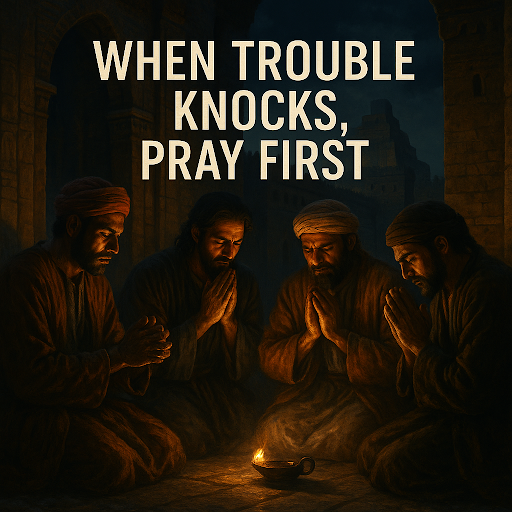
One hundred and twenty believers in an upper room, praying for ten straight days, and then heaven opened. Every major revival since has followed the same template. The Welsh revival, the Hebrides revival, the Azusa Street outpouring, the prayer meetings of Jonathan Edwards and the early American awakenings — every one of them was preceded by small groups of believers who refused to stop praying until God moved.
God still works the same way. He still waits for a praying remnant before He pours out His Spirit.
3. Real Prayer Is Earnest, Not Casual
There is a difference between saying prayers and praying.
James 5:16-17, “The effectual fervent prayer of a righteous man availeth much. Elias was a man subject to like passions as we are, and he prayed earnestly that it might not rain: and it rained not on the earth by the space of three years and six months.”
Effectual. Fervent. Earnest. Those are the adjectives the Holy Ghost chose. Not polished. Not eloquent. Not long. Earnest.
Elijah was a man with the same weaknesses as we have, and his earnest prayer shut up the heavens for three and a half years. The issue is never our ability. It is our earnestness.
4. Fasting Is the Companion of Praying
Throughout Scripture, when God’s people got serious about prayer, they added fasting to it.
Joel 2:12, “Therefore also now, saith the Lord, turn ye even to me with all your heart, and with fasting, and with weeping, and with mourning.”
Fasting is not a hunger strike to twist God’s arm. It is a way of saying with your body what your spirit already means: “God, I want You more than I want this meal, this comfort, this routine.” It is the outward sign of an inward earnestness.
Moses fasted forty days on the mountain. Daniel fasted three full weeks. Nehemiah fasted when he heard about Jerusalem. Esther called a three-day fast before going in to the king. The early church fasted and prayed before sending Paul and Barnabas. Every revival in Scripture was watered by tears and a missed meal.
5. Christ Taught Us How to Pray
When the disciples asked the Lord to teach them to pray, He gave them a pattern that puts God’s glory before our needs.
Matthew 6:9-10, “Our Father which art in heaven, Hallowed be thy name. Thy kingdom come. Thy will be done in earth, as it is in heaven.”
Notice the order. Hallowed be Thy name. Thy kingdom come. Thy will be done. Before a single petition for ourselves, the Lord taught us to ask first for the honor of God’s name, the advance of His kingdom, and the doing of His will on earth.
Most of our prayers are upside down. We start with our problems and never get to His glory. Revival prayer flips it back. It begins by exalting God and ends with the burden of His will being done.
6. What This Means for Us
If you are waiting for revival to come from a conference or a preacher or a movement, you will keep waiting. Revival begins in a closet, on a Bible, on your knees.
Hebrews 4:16, “Let us therefore come boldly unto the throne of grace, that we may obtain mercy, and find grace to help in time of need.”
The throne is open. The Mediator is interceding. The Spirit is helping our infirmities. Every condition is in place except one: a praying people.
Will you be one of them? Will you pick a time, a place, and a posture, and meet God there until He moves? The next part shows what God hands the praying remnant: the book.