A prophet stands watching his country march toward disaster. He knows the Chaldeans are coming because God said they were coming. And instead of asking God to call it off, he prays four words that changed how I think about hard seasons.
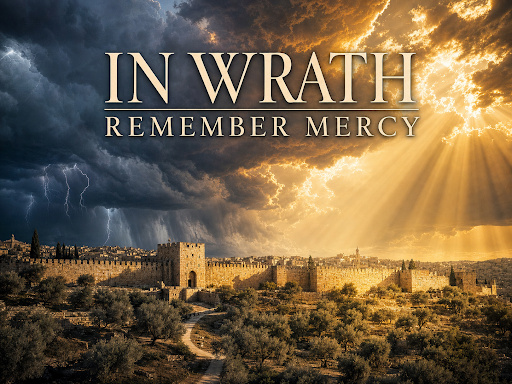
Habakkuk 3:2 “O LORD, I have heard thy speech, and was afraid: O LORD, revive thy work in the midst of the years, in the midst of the years make known; in wrath remember mercy.”
Habakkuk had just heard God explain in chapter 1 that Babylon was going to overrun Judah. Chapter 2 confirmed the judgment was set. By the time we get to chapter 3, Habakkuk is not trying to change God’s mind. He is asking God to remember mercy WHILE the wrath is falling.
This Prayer Comes AFTER God Already Announced Judgment
There are moments in the Bible when God turned back His judgment. Nineveh in Jonah 3 is the classic example.
But there are also moments when God said the judgment is settled and told His people to stop praying about it. Jeremiah faced this three separate times.
Jeremiah 7:16 “Therefore pray not thou for this people, neither lift up cry nor prayer for them, neither make intercession to me: for I will not hear thee.”
Jeremiah 11:14 “Therefore pray not thou for this people, neither lift up a cry or prayer for them: for I will not hear them in the time that they cry unto me for their trouble.”
Jeremiah 14:11 “Then said the LORD unto me, Pray not for this people for their good.”
Three times God told the prophet to stop asking. The judgment was coming and prayer was not going to change that. And Habakkuk, living in that same generation, learned a different prayer. If the wrath is set, ask God to remember mercy in the middle of it.
The Word “Remember” Is a Covenant Word
When the Bible says God “remembers,” it never means He forgot. God does not misplace anything.
Genesis 8:1 “And God remembered Noah, and every living thing… and God made a wind to pass over the earth, and the waters asswaged.”
God did not suddenly recall Noah existed. He acted on His covenant. Habakkuk was asking God to act on His covenant of mercy while pouring out His covenant of judgment. He was holding God to God’s own character.
Exodus 34:6-7 gives us God’s own definition of Himself. “The LORD, The LORD God, merciful and gracious, longsuffering, and abundant in goodness and truth, keeping mercy for thousands, forgiving iniquity and transgression and sin, and that will by no means clear the guilty.”
Merciful AND just. Habakkuk was praying God’s own words back to Him.
Jeremiah Saw the Answer From the Rubble
The wrath came, Babylon burned Jerusalem to the ground and the temple was destroyed. The people were carried away while Jeremiah sat in the ashes and wrote Lamentations.
And in the middle of the most sorrowful book in the Bible, Jeremiah looked up and said this:
Lamentations 3:22-23 “It is of the LORD’S mercies that we are not consumed, because his compassions fail not. They are new every morning: great is thy faithfulness.”
Habakkuk prayed “in wrath remember mercy.” Jeremiah looked back and said, “He did.” The prayer of Habakkuk 3:2 was answered in Lamentations 3:22. God did not stop the fire. But He preserved a people through it.
The Mercy Was Not the Escape. It Was the Joy in the Middle.
Look at how Habakkuk ends his own book.
Habakkuk 3:17-18 “Although the fig tree shall not blossom, neither shall fruit be in the vines, the labour of the olive shall fail, and the fields shall yield no meat; the flock shall be cut off from the fold, and there shall be no herd in the stalls: Yet I will rejoice in the LORD, I will joy in the God of my salvation.”
The fig tree still failed because the vines still bore no fruit. The stalls were still empty. The judgment still fell. God’s mercy was not that the trouble was removed. It was that God gave Habakkuk joy in the middle of the trouble. Sometimes God’s mercy in judgment is not removing the suffering. It is sustaining you through the suffering.
How This Applies to a Christian Today
For a Christian under the New Testament, “in wrath remember mercy” becomes one of the most useful prayers you can pray in a hard season.
1. Pray it over deserved trouble
When you have sinned and consequences are coming, do not beg God to cancel them. Ask Him to remember mercy inside them.
Hebrews 12:6 “For whom the Lord loveth he chasteneth, and scourgeth every son whom he receiveth.”
God’s chastening on His children is proof of His love. The right prayer is not for the discipline to stop. It is for God to be merciful in the middle of it, to teach us what He is trying to teach us, and to bring us out the other side stronger.
2. Pray it over your family
When you see hard consequences coming on a wayward child, spouse, or friend, do not just pray for their deliverance. Pray God preserves them through the discipline. The Chaldeans still came, but the remnant still lived.
2 Timothy 2:13 “If we believe not, yet he abideth faithful: he cannot deny himself.”
Even when the people we love are unfaithful, God stays faithful. That is where our prayer stands.
3. Pray it over America
When a nation has earned judgment, the right prayer is not always “spare us.” It is “in wrath remember mercy.” Keep your people, preserve your church and keep a witness burning while the fire falls.
Matthew 16:18 “Upon this rock I will build my church; and the gates of hell shall not prevail against it.”
Jesus made a promise about His church that stands no matter what a nation does. In wrath remember mercy means asking God to keep His church strong while a nation falls.
4. Pray it over yourself in trials
Sometimes God’s mercy is not removing the trouble. It is giving you joy in the middle of it.
2 Corinthians 12:9 “My grace is sufficient for thee: for my strength is made perfect in weakness.”
Paul asked God three times to remove the thorn. God said no. But He gave Paul something better than removing it. He gave him grace in the middle of it. That is the New Testament version of
Habakkuk 3:17-18
5. Trust that God can do both at once
The world thinks mercy and wrath cancel each other out. God pours out both from the same hand at the same time.
Romans 3:26 “That he might be just, and the justifier of him which believeth in Jesus.”
The cross is the ultimate proof. Full wrath on Jesus and at the same time, full mercy for us. In the same moment God did not pick between His justice and His love. He satisfied both at the same time on Calvary. That means every wrath-and-mercy prayer we pray is already answered in principle at the cross.
Judgment is not the end of God’s mercy. It is the setting for it!
Habakkuk asked God to remember mercy while the wrath was falling.
The next time you know a hard season is coming and you cannot pray it away, pray Habakkuk’s prayer instead. In wrath, remember mercy.