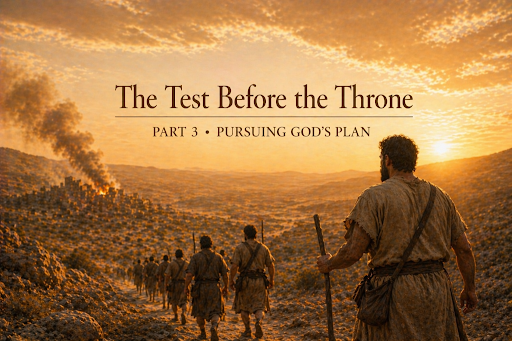
When the Israelites were finally ready to enter the Promised Land, excitement must have filled the camp. After forty long years of wandering in the wilderness, the time had come to cross the Jordan and take the land that God had promised them. But just as they reached the edge of that promise, something surprising happened.
Two and a half tribes; Reuben, Gad, and half of Manasseh, looked around at the land before crossing the river and decided they didn’t want to go any farther. They saw that the land east of Jordan was good for cattle, and they had plenty of cattle. So they asked Moses to let them settle there instead of going into the land God had prepared for them.
Numbers 32:1–5, “Now the children of Reuben and the children of Gad had a very great multitude of cattle: and when they saw the land of Jazer, and the land of Gilead, that, behold, the place was a place for cattle;
The children of Gad and the children of Reuben came and spake unto Moses, and to Eleazar the priest, and unto the princes of the congregation, saying,
Ataroth, and Dibon, and Jazer, and Nimrah, and Heshbon, and Elealeh, and Shebam, and Nebo, and Beon,
Even the country which the Lord smote before the congregation of Israel, is a land for cattle, and thy servants have cattle:
Wherefore, said they, if we have found grace in thy sight, let this land be given unto thy servants for a possession, and bring us not over Jordan.”
The Picture of God’s Will
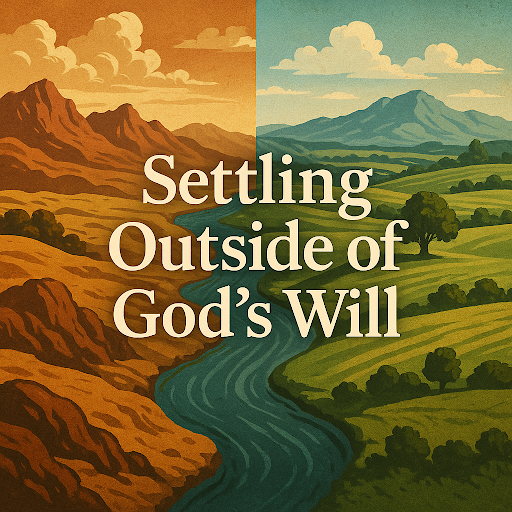
In the Bible, the Promised Land represents living in the center of God’s will, a place of victory, blessing, and rest. The wilderness represents wandering outside of His will, a place of struggle, delay, and wasted potential.
God wanted His people to cross over into everything He had for them. But these two and half tribes chose what looked best to their eyes instead of what was best for their souls. They wanted comfort over calling. They chose cows over Canaan.
And yet, God was gracious. He allowed them to have what they asked for. He gave them permission to settle east of the Jordan, but it was outside the full blessing of His promise.
Immediate Trouble
Their choice brought problems almost immediately. When the rest of Israel crossed into the Promised Land, these tribes built an altar by the Jordan River, which caused a national crisis. The other tribes thought they were rebelling against God.
Joshua 22:10–12, “And when they came unto the borders of Jordan, that are in the land of Canaan, the children of Reuben and the children of Gad and the half tribe of Manasseh built there an altar by Jordan, a great altar to see to.
And the children of Israel heard say, Behold, the children of Reuben and the children of Gad and the half tribe of Manasseh have built an altar over against the land of Canaan, in the borders of Jordan, at the passage of the children of Israel.
And when the children of Israel heard of it, the whole congregation of the children of Israel gathered themselves together at Shiloh, to go up to war against them.”
They claimed it was only a “memorial” for their children, to remind them that they were still part of Israel. But the truth is, if they had simply gone where God told them to go, they wouldn’t have had to build an altar to prove they still belonged. They made excuses about their kids, but they should have thought about their kids before choosing land based on cattle instead of God’s original plan.
Drifting Further Away
Now fast forward hundreds of years to the New Testament. In Luke 8:26–33, we find Jesus arriving in a place called the country of the Gadarenes, the very region where the tribe of Gad had settled centuries earlier.
Luke 8:26–33, “And they arrived at the country of the Gadarenes, which is over against Galilee.
And when he went forth to land, there met him out of the city a certain man, which had devils long time, and ware no clothes, neither abode in any house, but in the tombs.
When he saw Jesus, he cried out, and fell down before him, and with a loud voice said, What have I to do with thee, Jesus, thou Son of God most high? I beseech thee, torment me not.
(For he had commanded the unclean spirit to come out of the man. For oftentimes it had caught him: and he was kept bound with chains and in fetters; and he brake the bands, and was driven of the devil into the wilderness.)
And Jesus asked him, saying, What is thy name? And he said, Legion: because many devils were entered into him.
And they besought him that he would not command them to go out into the deep.
And there was there an herd of many swine feeding on the mountain: and they besought him that he would suffer them to enter into them. And he suffered them.”
Think about that. The tribe that once raised cattle in a land “good for cattle” was now raising pigs, unclean animals that the law of Moses strictly forbade. They had drifted so far from God that when Jesus arrived, they begged Him to leave their land.
What a picture of what happens when we settle outside of God’s will. What starts as a “better deal” turns into spiritual decay.
Choosing God Over Gain
When we make decisions based on money, comfort, or opportunity instead of God’s will, we may get what we want, but we’ll lose what matters most.
You might pick a job that pays more but pulls you away from serving God. You might move somewhere that’s better for your career but worse for your family’s faith. You might choose what looks good for the cattle, only to find out later you’ve lost your calling.
Proverbs 14:12, “There is a way which seemeth right unto a man, but the end thereof are the ways of death.”
Matthew 6:33, “But seek ye first the kingdom of God, and his righteousness; and all these things shall be added unto you.”
Let God choose your future. Let Him guide your steps, even when it doesn’t make the most sense on paper. He knows what you need, and He can bless you far more in His will than you could ever gain outside of it.
Psalm 37:4, “Delight thyself also in the Lord; and he shall give thee the desires of thine heart.”
The tribes of Reuben, Gad, and half of Manasseh teach us that settling outside of God’s will might look easier at first, but it always costs more in the end. Stay on the side of promise. Stay in the will of God. Don’t pick land for your cattle, let God pick it for your calling.