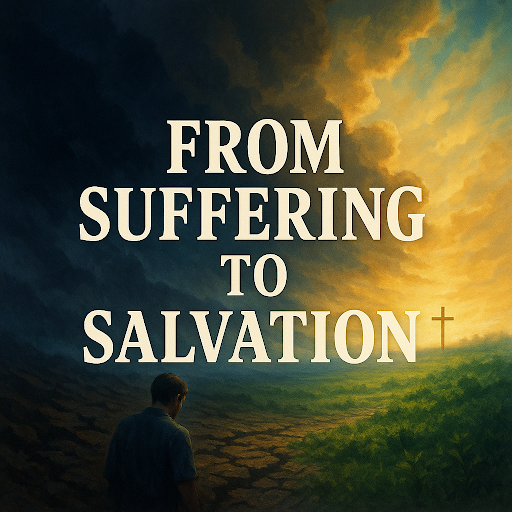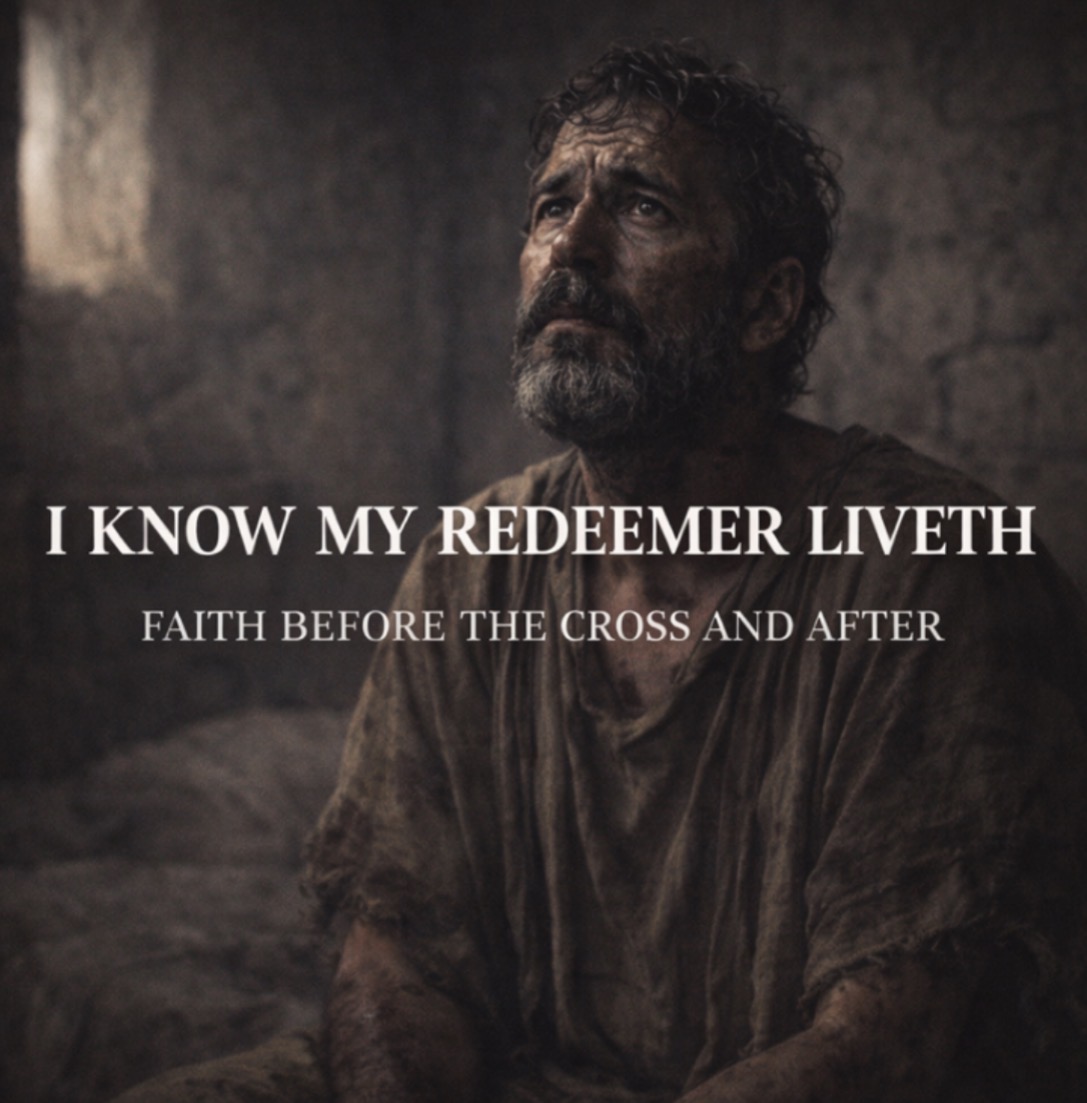
Job was a man sitting in the middle of total wreckage. He had lost his children, his wealth, and his health. Even his own wife told him to “curse God, and die.” He was isolated, in constant physical pain, and surrounded by friends who were doing nothing but pointing fingers. It is in the middle of this absolute misery that Job makes one of the most powerful statements of faith in the entire Bible.
Job 19:25, “For I know that my redeemer liveth, and that he shall stand at the latter day upon the earth.”
Notice he doesn’t say, “I hope” or “I think.” He says, “I know.”
Pre-Cross Faith: Looking Forward
Job lived roughly 1,500 years before Jesus Christ was born. He lived before Moses, before the Law, and before the Tabernacle. Yet, Job wasn’t looking for a religious system to save him. He was looking for a living Person.
A “Redeemer” is someone who buys back, rescues, and restores what was lost. Job knew that even if his body was destroyed, there was a Living Redeemer who would eventually stand physically upon the earth.
Job wasn’t just talking about being delivered from his current troubles; he was talking about a personal Redeemer who is active and alive. Job was looking forward by faith, trusting a promise he hadn’t seen fulfilled yet.
Shadows of Things to Come
Before Christ came, the Old Testament was filled with “shadows.”
Hebrews 10:1, “For the law having a shadow of good things to come, and not the very image of the things…”
A shadow proves that something real is standing in the light. The innocent lamb slain for sin, the blood on the altar, and the Day of Atonement were all shadows. They pointed to the coming Christ. These sacrifices were meant to point people’s faith, but they never “finished” the work. They had to be repeated every year because they could only point out sin, not remove it. They always pointed forward, never backward.
It is interesting to note what Job didn’t say. He didn’t say, “I know my sacrifices are enough,” or “I trust the religious system.” He didn’t put his confidence in rituals. He put his confidence in a Person. Even without the full map of the New Testament, Job’s heart was anchored in the Redeemer who had not yet appeared.
Post-Cross Faith: Looking Back
Today, we have a different viewpoint than Job, but it requires the same faith. When Jesus hung on the cross, He cried out, “It is finished” (John 19:30).
Hebrews 10:12, “But this man, after he had offered one sacrifice for sins for ever, sat down on the right hand of God;”
In the Bible, a priest never sat down in the Tabernacle because the work was never done.
But Jesus sat down. That move showed the work was complete. Christians today don’t look forward to redemption being accomplished; we look back at the cross and the empty tomb. Our faith rests on a finished work.
Same Redeemer, Clearer View
The Redeemer Job trusted is the same Jesus we trust today. Job looked forward through a fog of pain and shadows, yet he remained certain. We look back with the clear revelation of the New Testament and the historical fact of the resurrection.
If Job could stand firm while looking ahead through the dark, we have every reason to stand firm while looking back at the victory. The Redeemer lived then, and He lives now. He stood upon the earth once to pay the debt, and as Job prophesied, He will stand upon it again. Faith before the cross was an expectant hope; faith after the cross is a rested assurance in what has alre