The concept of a “scapegoat” is common in our language today, usually referring to someone who takes the blame for someone else’s mistake.
But the origin is found in the Tabernacle. It was a specific, bloody, and necessary part of how God pointed to the sin problem before the cross.
Leviticus 16:10, “But the goat, on which the lot fell to be the scapegoat, shall be presented alive before the Lord, to make an atonement with him, and to let him go for a scapegoat into the wilderness.”
The Ritual of the Two Goats
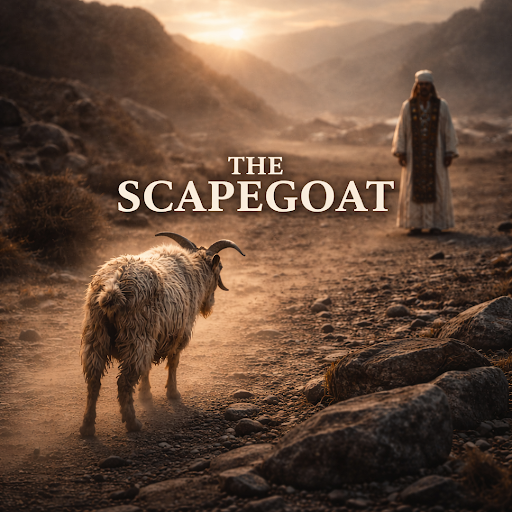
On the Day of Atonement, the High Priest would take two goats. One was slaughtered as a sin offering, its blood was shed to satisfy the justice of God. But the second goat, the scapegoat, was handled differently. The priest would lay his hands on its head, confessing all the sins of the people, symbolically transferring that guilt onto the animal.
Then, the scapegoat was led away into the wilderness, into a “land not inhabited.” As the people watched that goat disappear over the horizon, they saw a physical picture of their sins being carried away. It was a symbolic removal, but it was only a shadow of things to come.
The Irony of Barabbas
Fast forward to the trial of Jesus. We see the Law of the Scapegoat playing out in real time. Pilate offers the crowd a choice: release Jesus, the innocent Man, or Barabbas, a convicted murderer and rebel.
The name “Barabbas” is fascinating. In Aramaic, Bar means son and Abba means father. This criminal’s name literally meant “Son of the Father.”
There stood a counterfeit “son of the father” who was guilty of death, and there stood Jesus, the true, eternal Son of the Father, who was innocent.
The guilty son was set free, while the innocent Son was condemned. Barabbas walked away from his chains because Jesus walked toward the cross. Barabbas became a living illustration of the scapegoat, the one who goes free because another takes the weight of the crime.
The Ultimate Scapegoat
Jesus Christ is the fulfillment of both goats from Leviticus. He was the sacrificed goat whose blood was shed for our atonement, and He was the scapegoat who bore our sins “in his own body on the tree” (1 Peter 2:24).
The scapegoat in the wilderness was a symbol; Jesus on the cross was the fulfillment. He didn’t just carry our sins into the wilderness; He carried them into the grave and left them there. He took the blame so we could take the blessing. He took the crown of thorns so we could receive a crown of life.
We are all Barabbas. We are the guilty ones who deserve the penalty, yet we find ourselves standing in the sunlight of freedom because someone else took our place. The true Son of the Father was not spared so that we, the rebellious sons, could be saved.
The question isn’t whether your sins have been paid for, Jesus finished that work. The question is whether you will follow the One who took your place. Barabbas was set free and disappeared into the crowd; we have been set free so that we can fall at the feet of our Redeemer.