Gleaning is a Bible term we don’t use much today.
In simple words, it means gathering what is left behind after the main harvest.
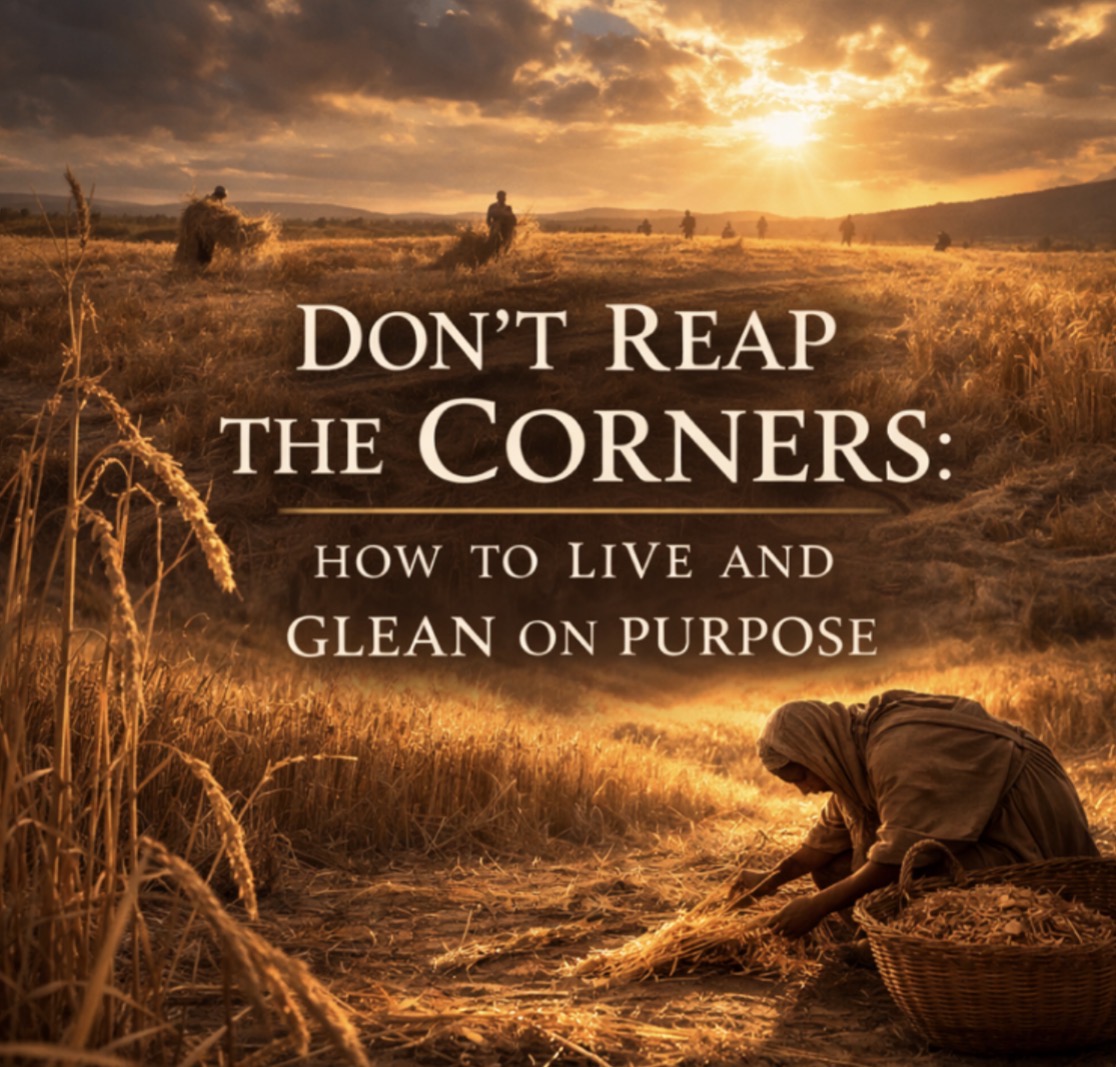
In the Old Testament, when farmers harvested their fields, they were not allowed to pick up everything. God commanded them to leave the corners of the field and anything that dropped. The poor, widows, and strangers could then come and collect what remained. God told Israel to leave the corners of their fields.
He was not against profit but He was against selfishness and greed. He built generosity into their farming, humility into their survival, and mercy into their system.
Leviticus 19:9–10 says, “And when ye reap the harvest of your land, thou shalt not wholly reap the corners of thy field… thou shalt leave them for the poor and stranger: I am the LORD your God.”
We are not farmers, but we still reap. We reap income, influence, knowledge, opportunities, and time. The problem is most of us harvest right to the edge.
Here is how the law of gleaning still applies.
1. Leave Corners in Your Life
Leviticus 19 was a command to create margin.
The farmer was not allowed to scrape every inch for himself. He had to leave something behind.
Most people live at 100 percent capacity. Every dollar is assigned, every night is booked and every weekend is full. Then when a need shows up, it feels like an inconvenience.
If there is no margin in your schedule or finances, no one can glean from you.
Leave room in your budget to give without stress, leave room in your calendar to serve without resentment, and leave room in your energy to respond when someone needs help.
If you reap to the corners, you leave no space for mercy.
2. Gleaning Requires Humility
In Ruth, we see how this worked on the other side.
Ruth did not demand a field to own, she asked permission to glean. Then she bent down and picked up what others left behind.
Gleaning is low and quiet work.
Some people never grow because they refuse to glean. They want ownership before apprenticeship.
Gleaning today looks like learning quietly from someone ahead of you. It looks like serving in small roles while showing up early and staying late without knowing.
3. God Oversees the Field
Ruth 2:3 says her “hap was to light on a part of the field belonging unto Boaz.” It looked accidental, but it was not.
God directed her steps.
Boaz knew the command in Leviticus, and he went further. He told his men to let fall handfuls on purpose.
You do not control the field or landowner. You do control your faithfulness!
Show up and work hard. God knows how to drop provision where you can reach it.
4. Jesus Defended Gleaning
In Matthew 12, the disciples plucked ears of corn as they walked through a field. The Pharisees objected.
They watched the field but never fed anyone.
Jesus sided with the hungry and two lessons stand out.
First, it is not wrong to receive. God built provision into His law. Pride sometimes refuses what God allows.
Second, critics will always stand at the edge. There will always be people who know the rules but do not understand mercy. Do not let them talk you out of what God has provided.
5. Glean from the Word and from Seasons
Gleaning is not only physical, it is spiritual.
When you read your Bible, you are gleaning. You may not understand every chapter. That’s ok. Take what you can carry. One verse can feed you for a day.
You also glean from hard seasons.
Glean patience from waiting, strength from pressure and wisdom from failure.
If you are in a season where you feel behind others, glean anyway. Nothing in God’s field is wasted.
6. Become a Field Others Can Glean From
Ruth started in the corners and ended up in the lineage of a king.
The Christian life matures this way. First you glean and then you leave corners.
As you grow, create margin for someone else. Share what you have learned and give when you can. Open doors that once felt shut to you.
You once survived on gleaned grace. Now leave some behind.
The command in Leviticus ends with this: “I am the LORD your God.”
It is His field.
The Lord of the harvest sees both the reaper and the gleaner.