1 Samuel 30:7-8 says, “And David said to Abiathar the priest, Ahimelech’s son, I pray thee, bring me hither the ephod. And Abiathar brought thither the ephod to David. And David enquired at the LORD, saying, Shall I pursue after this troop? shall I overtake them? And he answered him, Pursue: for thou shalt surely overtake them, and without fail recover all.”
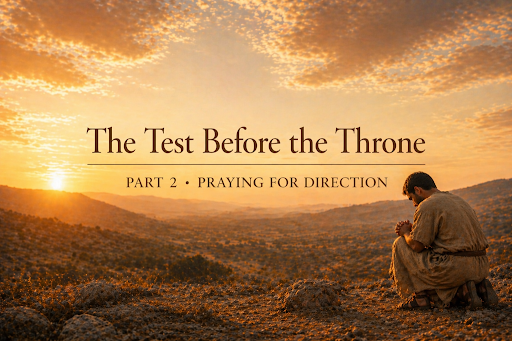
After David got his heart right, now he goes to God for direction. This is the step most people skip. And it’s the step that changes everything.
Think about it. David’s family has been kidnapped. His city has been burned. Every instinct in his body is screaming at him to run after the Amalekites right now. Nobody would have blamed him for that. It’s the obvious thing to do. But David stopped and prayed first.
Why? Because he learned something that a lot of people in the Bible learned the hard way: the obvious move isn’t always the right move.
Joshua learned this with the Gibeonites. In Joshua 9, a group of men showed up wearing old clothes, carrying dry bread, and claiming they had traveled from a far country. They looked the part. They sounded convincing. Everything about them seemed legitimate. Joshua made a treaty with them and let them live. It seemed like the wise and obvious decision.
Joshua 9:14 says, “And the men took of their victuals, and asked not counsel at the mouth of the LORD.”
They didn’t pray. They trusted their own eyes. And they got tricked. The Gibeonites were their neighbors, not distant travelers. That treaty became a snare for Israel because Joshua did the obvious thing instead of asking God first.
Moses learned it at the rock. In Numbers 20, God told Moses to speak to the rock and water would come out. But Moses was angry. He was fed up with the people’s complaining. So instead of speaking to it, he struck it twice with his rod. Water still came out, but God told him in verse 12, “Because ye believed me not, to sanctify me in the eyes of the children of Israel, therefore ye shall not bring this congregation into the land which I have given them.” Moses did what worked before. He did what felt right in the moment. And it cost him the promised land.
Peter learned it in the garden. When the soldiers came to arrest Jesus, Peter pulled out a sword and cut off the ear of Malchus, the high priest’s servant (John 18:10). He was defending the Lord. It seemed noble. It seemed brave. But Jesus rebuked him. “Put up thy sword into the sheath: shall I not drink the cup which my Father hath given me?” (John 18:11). Peter acted out of instinct. He didn’t ask. And he almost got in the way of the plan of God.
Abraham learned it in the famine. When the famine hit Canaan in Genesis 12, Abraham packed up and went to Egypt. The Bible never says God told him to go. He just went. And it led to him lying about Sarah, nearly losing her to Pharaoh, and being rebuked by a pagan king. All because he did what seemed like the smart move and left God out of the decision.
David could have made the same mistake. He could have just chased the Amalekites. But he stopped, called for the ephod, and asked God two specific questions: Should I go? And will I get them back?
God answered both: “Pursue: for thou shalt surely overtake them, and without fail recover all.”
That phrase “without fail recover all” is important. God didn’t say, “You’ll recover most of it.” He didn’t say, “You might get some of them back.” He said all. But David would never have heard that promise if he hadn’t stopped to ask.