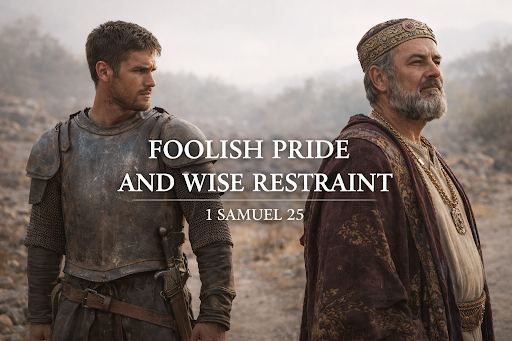
1 Samuel 25 is a story about a man who almost let his temper ruin his testimony, and a man whose ego actually cost him his life.
David and his men had been living in the wilderness, acting as a wall of protection for the shepherds of a wealthy man named Nabal. David’s men were a safeguard.
They protected Nabal’s flocks from thieves and predators. When it came time to shear the sheep, a season of celebration and hospitality, David sent a respectful request for some provisions. He was expecting reasonable hospitality for the service he had provided.
Nabal’s response was a slap in the face. He didn’t just say no; he insulted David’s character, calling him a runaway servant. David, the man who had shown such restraint with King Saul, snapped. He told 400 of his men to strap on their swords. He was headed for a fight. There’s a couple lessons we can draw from both David, Abigail and Nabal in this story:
1. The Name and the Nature of a Fool
Nabal’s name literally means “fool.” He lived up to it by ignoring a clear opportunity to be kind.
1 Samuel 25:10–11 “And Nabal answered David’s servants, and said, Who is David? and who is the son of Jesse? there be many servants now a days that break away every man from his master. Shall I then take my bread, and my water, and my flesh… and give it unto men, whom I know not whence they be?”
Nabal missed a massive opportunity to show grace. For the believer, the lesson is clear: don’t let your possessions or your pride blind you to your obligations. When you have the power to do good and you withhold it because of your ego, you are playing the part of Nabal.
2. The Wisdom of Abigail
David was on the verge of a bad decision that would have followed him for the rest of his life. He was about to shed innocent blood because his feelings were hurt. But God sent Abigail, Nabal’s wife, to stop him.
Abigail didn’t make excuses for her husband’s foolishness, but she appealed to David’s higher calling. She reminded him that God would build him a sure house and that he shouldn’t have the “grief” of vengeance on his account when he eventually became king. Her wisdom stopped David from descending into murder.
3. Let God Handle the Justice
David learned a lesson that day: he didn’t need to swing the sword to get justice. When David stepped back it allowed God to step in. Ten days later, the Bible says the Lord smote Nabal and he died. There’s a New Testament standard for every Christian here. When you are insulted, overlooked, or treated unfairly, your impulse is to answer with the sword and “fix” it yourself. But God tells us to do the opposite.
Romans 12:19 “Dearly beloved, avenge not yourselves, but rather give place unto wrath: for it is written, Vengeance is mine; I will repay, saith the Lord.”
4. Vengeance is a Vain Thing
Trying to secure your own life or your own reputation through “vain things” like anger and revenge has no profit. David would have regretted the slaughter in the morning. Because he listened to wise counsel, he kept his hands clean and let God settle things. Nabal died a fool because he wouldn’t show hospitality. David lived to be king because he learned to avoid vengeance.
Don’t miss your opportunity to show grace to others, and don’t take it upon yourself to punish those who fail you. If you trust God’s justice, you don’t have to carry the burden of your own anger. Let Him handle the fools; you focus on following the King.