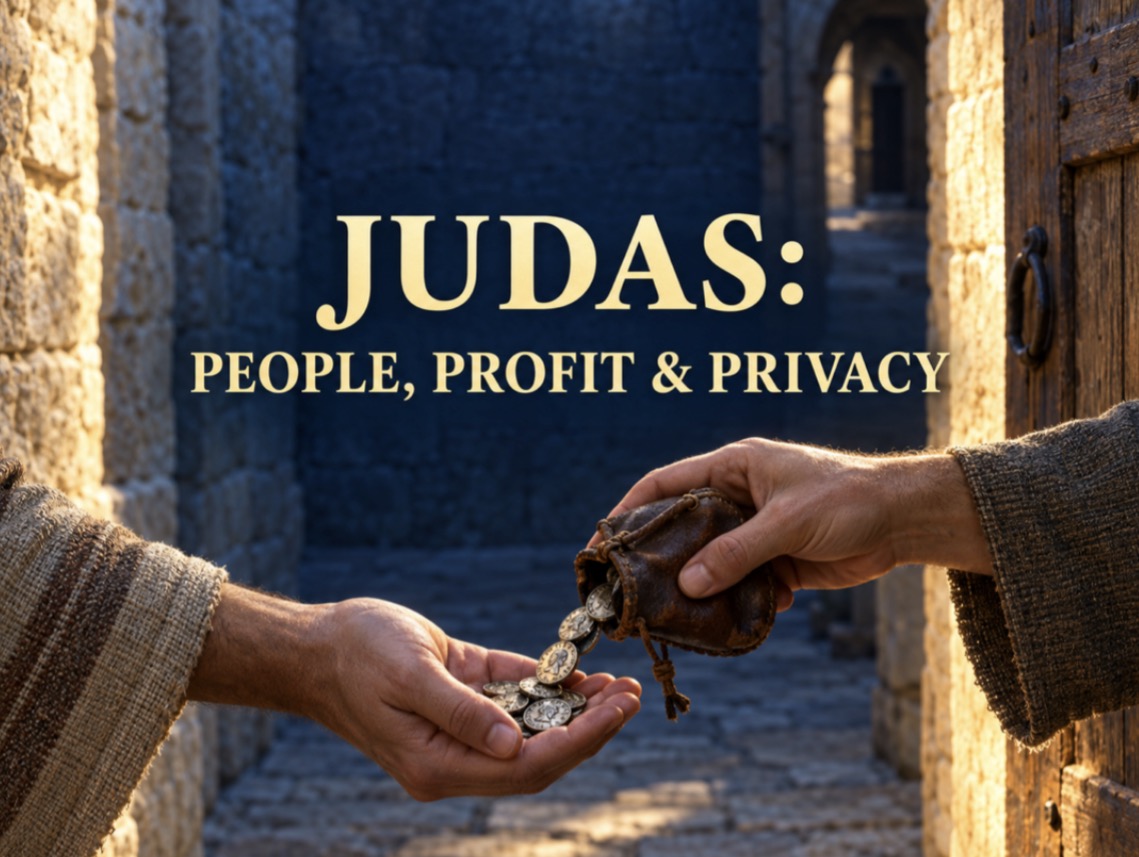
It’s easy to read about Judas and wonder how anyone could turn against Jesus. He was one of the twelve, yet he went to the chief priests and agreed to help them take Christ (Mark 14:10-11).
We can choose people’s approval over obeying God, take money we should have refused, and hide things we know are wrong.
People: We Want to Fit In
Mark 14:10 “And Judas Iscariot, one of the twelve, went unto the chief priests, to betray him unto them.”
Judas went to people who wanted Jesus put to death, and they were glad to have his help (Mark 14:1,10-11). Their approval did not make his choice right.
I know how hard it can be to disappoint people. Maybe our friends are making fun of someone who takes the Bible seriously. Maybe someone we love wants us to do something wrong.
We call it keeping the peace, but sometimes we are choosing which person we are willing to disappoint. We would rather disobey the Lord than have someone upset with us.
We can love people and still tell them no. A friendship should not require us to set aside what God has said.
Profit: We Want What Is Offered
Matthew 26:15 “And said unto them, What will ye give me, and I will deliver him unto you? And they covenanted with him for thirty pieces of silver.”
Judas asked what they would give him, and they named a price. John also tells us that he had already been stealing from the money bag entrusted to him (Matthew 26:15; John 12:6).
It’s easy to be shocked by his greed until being honest costs us something.
We must ask ourselves if we’re willing to sell out for money Are we willing to give up what we believe in exchange for some earthly resources?
We tell ourselves we have bills to pay, and we do. But having a real need does not give us permission to meet it in a wrong way.
Before we accept what is offered, we need to ask what we will have to do to get it. Some offers should be turned down, even when we could really use the money.
Privacy: We Want to Keep It Hidden
Luke 22:6 “And he promised, and sought opportunity to betray him unto them in the absence of the multitude.”
Judas had agreed to the betrayal, and now he wanted a chance to do it away from the crowd.
He was looking for an opportunity to carry out a choice he had already made.
That should make us think about the things we arrange when nobody is watching. We wait until the house is empty, delete the messages, or change part of the story so nobody asks questions.
Not everything private is wrong. But when we are hiding something because we know it is wrong, calling it personal does not excuse it.
We don’t need to wait until our choices cause a public mess before we deal with them. We can be honest with God about it today and take the step we have been avoiding.
Maybe that means telling the truth, turning down the money, or ending a conversation we should never have started. We can spend a lot of time finding fault with Judas while making excuses for ourselves, and that won’t help us follow Christ.


