2 Samuel 7:1-17, “And it came to pass, when the king sat in his house, and the Lord had given him rest round about from all his enemies; That the king said unto Nathan the prophet, See now, I dwell in an house of cedar, but the ark of God dwelleth within curtains. And Nathan said to the king, Go, do all that is in thine heart; for the Lord is with thee. And it came to pass that night, that the word of the Lord came unto Nathan, saying, Go and tell my servant David, Thus saith the Lord, Shalt thou build me an house for me to dwell in?”
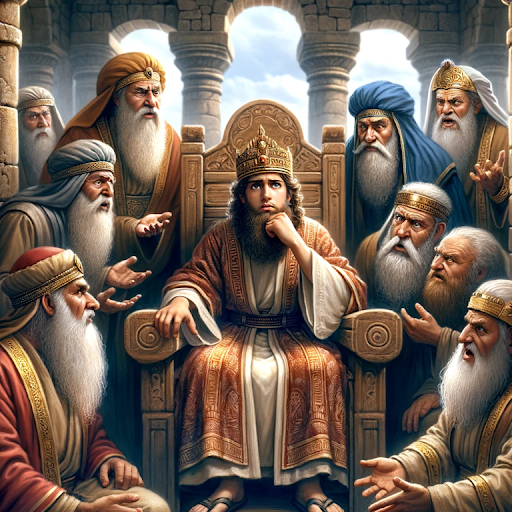
David is finally home and the wars are over for now. The ark is in Jerusalem while David is sitting in his cedar palace and looking around at how good his life is. His heart is bothered by something. He has a beautiful house and the ark of God is still under a tent. So he calls in Nathan the prophet and tells him what he wants to do. He wants to build a house for God.
Nathan says, “Go, do all that is in thine heart; for the Lord is with thee” (2 Samuel 7:3). Green light from the prophet of God to go ahead. But that very night God comes to Nathan and tells him something completely different. Nathan has to go back to David the next morning and tell him no. The same prophet who said “go for it” twelve hours earlier now has to look the king in the eyes and tell him God is not going to let him do this.
But God does not stop with the no. He gives David a promise that is bigger than anything David ever asked for. David wanted to build God a house. God says, “I will build you a house.” Not a building. A dynasty. A throne that will never end. A son who will sit on that throne forever. The Davidic covenant is born in the same conversation where David’s biggest plan got shut down. The thing David wanted to build for God turned into the thing God built for David, and through David, for the whole world. Christ Himself comes through this promise.
The point of this whole chapter is simple. God will sometimes say no to your best idea because He has a bigger one. And the way you handle that will determine whether you ever get to see the bigger thing.
Here are seven things from this chapter that every believer needs to settle in his heart.
1. The Mark of a True Leader
Nathan was a real prophet, a man who heard from God and a man you could trust. He was exactly the kind of leader every believer should have in their life. But the first time David asked him about building the temple, Nathan answered too fast. He spoke from his own heart instead of waiting on the Lord, and God had to correct him that very night.
We know Nathan was a great leader because the next morning he walked right back into the king’s chamber and told David the truth, even though it meant admitting he had been wrong the day before.
He did not try to twist his first answer to make it line up with God’s. He owned it! The mark of a good leader is that when he is wrong, he is willing to say so, go back, and make it right.
God puts pastors and mentors in your life on purpose, and the believer who refuses godly counsel is asking for trouble. It is a blessing to be surrounded by godly men who do their best to lead you well, and when they miss it, they come back and own it. Do not take a Nathan in your life for granted. Pray for him, honor him, and follow him as he follows Christ. The kind of leader who can stand in front of the king and say I was wrong yesterday is the kind of leader God will use to keep you walking straight for the rest of your life.
2. God’s No Is Not Always About You
Later on in 1 Chronicles God explains why David could not build the temple. “But God said unto me, Thou shalt not build an house for my name, because thou hast been a man of war, and hast shed blood” (1 Chronicles 28:3).
God was not punishing David; He was protecting the picture. The temple was going to be a place of peace, a picture of the Prince of Peace who would come, and God did not want it built by a man whose hands had been on a sword for forty years.
Sometimes the reason God says no to you has nothing to do with whether He loves you or whether you have been faithful. It has to do with the bigger picture you cannot see yet. Paul wrote, “Now we see through a glass, darkly; but then face to face: now I know in part; but then shall I know even as also I am known” (1 Corinthians 13:12).
When God closes a door on you, do not automatically assume you did something wrong. Sometimes, He is just keeping you out of an assignment that does not match what He is trying to show the world through you.
3. God’s No Almost Always Comes With a Bigger Yes
David asked to build a house for God. God came back and said no, and then in the same breath promised to build David a house instead. “And thine house and thy kingdom shall be established for ever before thee: thy throne shall be established for ever” (2 Samuel 7:16). David asked for a building; God gave him an everlasting throne, a son who would sit on it forever, and a covenant that points all the way to Jesus Christ.
This is how God handles His children. Paul said God is “able to do exceeding abundantly above all that we ask or think, according to the power that worketh in us” (Ephesians 3:20). When God tells you no on the thing you wanted, get ready, because what He has in mind is bigger. The closed door is rarely the end of the story. Most of the time it is the doorway to something you were not yet brave enough to ask for. Stop crying about the no and start watching for the bigger yes that is coming behind it.
4. The Thing You Wanted Might Be Assigned to Your Children
David did not get to build the temple. But he got to be the father of the man who did. God told him, “He shall build an house for my name, and I will stablish the throne of his kingdom for ever” (2 Samuel 7:13).
Solomon got the assignment David wanted. And David spent the rest of his life gathering gold and silver and stone and cedar and iron, drawing the plans, and getting it ready so his son could build it.
There are some things God has put on your heart that you will not finish. You will start them, but somebody who comes after you will be the one to see them done. That is not a tragedy. That is how God builds across generations. Solomon wrote, “A good man leaveth an inheritance to his children’s children” (Proverbs 13:22). Your job is to prepare what you can and pass the rest down. The timing was just bigger than your lifespan, so build for your kids, your grandkids and the church that comes after you. Some of the most important things you do for God will be finished by hands you will never shake.
5. The Right Response to a No Is Worship, Not Argument
Look at what David does the moment Nathan delivers the bad news. He does not argue, push back, or find another prophet to get a second opinion. The next verse says, “Then went king David in, and sat before the Lord, and said, Who am I, O Lord God? and what is mine house, that thou hast brought me hitherto?” (2 Samuel 7:18). He went and sat down in front of God and started praying a prayer of pure thankfulness.
When God shuts a door, if we aren’t careful, we will fight Him to keep it open. James wrote, “Submit yourselves therefore to God. Resist the devil, and he will flee from you” (James 4:7). Submission is the right response when God says no. Do not shop around for a different answers. Sit down before the Lord and start thanking Him for what He has already done. The faster you submit, the faster you find out what He has actually been planning for you. The believer who fights God’s no never gets to see God’s bigger yes.
6. Trust That God Sees a Picture You Cannot See
The reason God said no to David was tied to a temple Solomon would build, a throne that would last forever, and a Messiah who would come through David’s line. David could not see any of that in 2 Samuel 7. He could only see that the prophet just told him no on his big idea. But God was working on a plan that would still be unfolding three thousand years later.
Remember this: when God tells you no, you are seeing one inch of a plan that is a thousand miles long. The God who said no to David’s temple gave the world Christ. The God who said no to Paul going into Asia gave the world the gospel in Europe (Acts 16:6-10). The God who is saying no to you right now is not done. He is just bigger than your line of sight.
David walked into that conversation wanting to build a house for God. He walked out with a covenant that points to Christ.
You have prayed for things God has not given you. You have wanted things God has said no to. The temptation is to read God’s no as God’s neglect, but it is never that. It is usually His way of clearing room for something bigger.
Sit down before the Lord like David did. Thank Him for what you have already received. Open your hands and let Him write a story you would not have asked for, because the story He is writing is always better than the one you were trying to build.