Part 1: Deny It
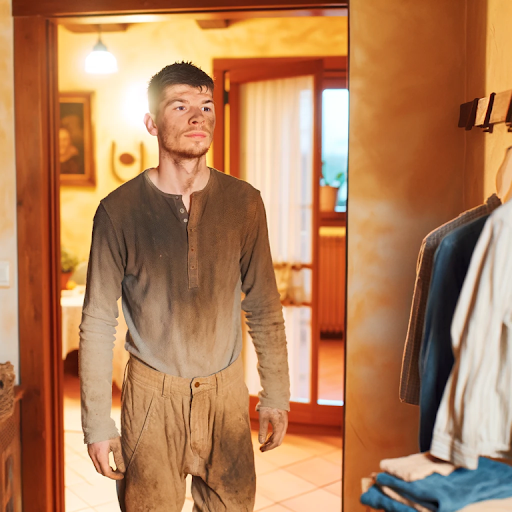
After I got saved and got serious about the Lord, I was still drinking.
Most of the trouble I had experienced in my life had come from drinking. The bad decisions, many regrets I couldn’t undo, and relationships I had strained. Almost every real problem I could point to in my past traced back to drinking somewhere.
But after I started following Jesus, I did what most new Christians do. I made adjustments. I drank less than I used to. I told myself I had it under control and it is different now. I told myself that if the amount was going down, that was the same thing as dealing with it.
It wasn’t.
I made excuses. I told myself drinking was not really my issue, it was just something I did socially. I told myself God cared about the heart, not the beverage. I told myself I could handle a little. I told myself the Bible only condemned drunkenness, not drinking, so as long as I stayed short of drunk, I was fine.
Every one of those excuses had just enough Bible sounding language to keep me comfortable. And every one of them was denial.
I was just quietly denying that it was a problem at all. It was easier to keep it in my life and downplay it than to look at what it was actually doing to me and my walk with Christ.
Then the Lord started dealing with me. Just a slow, quiet pressure. Every time I heard a sermon, it seemed like the preacher was speaking straight to me. Every time I tried to grow spiritually, I hit the same ceiling.
I finally realized what David realized in Psalm 32. My bones were wearing out because I would not deal with what God had already been telling me to deal with. I threw away all alcohol in my house and never drank again.
The moment I stopped denying it and actually judged myself for it, the ceiling lifted. God did not have to keep pressing on me because I finally agreed with Him.
That is what denial does. It buries the failure so we don’t have to face it. But the failure keeps working underneath, whether we look at it or not.
And that is the first D of judging our own failure: Deny It.
Proverbs 28:13 “He that covereth his sins shall not prosper: but whoso confesseth and forsaketh them shall have mercy.”
There is no middle ground in that verse. You either cover, or you confess.
Notice also the word “prosper.” God is talking about the spiritual prospering of a Christian. The growth, peace, joy and fruit. The closeness with Christ. All of it stalls out when denial is running our life.
David Hid For a Year
The classic Bible example of denial is David after Bathsheba.
Look at the sequence:
- David saw her.
- He took her.
- He tried to hide the pregnancy by calling Uriah home from the battle.
- When Uriah wouldn’t sleep with his wife because he was too loyal to the men in the field, David wrote a letter to Joab that killed him.
Then David married Bathsheba and acted like nothing happened.
For about a year, David lived with it. He kept ruling, judging cases at the gate and kept writing psalms. On the outside, everything looked fine.
On the inside, Psalm 32 tells us what was actually happening.
Psalm 32:3-4 “When I kept silence, my bones waxed old through my roaring all the day long. For day and night thy hand was heavy upon me: my moisture is turned into the drought of summer.”
David was falling apart. His body was breaking down and his strength drying up. God’s hand was pressing on him twenty-four hours a day. He was still leading Israel, still worshipping in public, still going through the motions, but underneath, denial was destroying him.
Then Nathan came.
2 Samuel 12:7 “And Nathan said to David, Thou art the man.”
A whole year of denial cracked open in four words. And the moment David stopped denying it, he wrote Psalm 51 and asked God to create a clean heart in him.
He was still chastened, still lost his child and the sword still came to his house. But he was restored to fellowship the moment he stopped hiding.
Achan Buried the Gold
Achan is a warning about how denial spreads when it is not dealt with.
After Jericho, God had told Israel not to take any of the spoil, but Achan disobeyed. He took a Babylonish garment, some silver, and a wedge of gold, and buried it under his tent.
Joshua 7:21 “When I saw among the spoils a goodly Babylonish garment, and two hundred shekels of silver, and a wedge of gold of fifty shekels weight, then I coveted them, and took them, and, behold, they are hid in the earth in the midst of my tent, and the silver under it.”
Notice the progression:
- He saw
- He coveted
- He took
- He hid
Then Israel went to fight the small town of Ai and got beaten. Thirty-six men died because one man was in denial. God wouldn’t let the His people advance with sin in the camp.
Achan didn’t just cost himself either.
His denial cost his whole family, and it cost thirty-six other families their fathers, husbands, and sons. When Joshua finally identified him, Achan was stoned along with his household.
Denial never stays private. What we bury under our tent always affects the people around us.
Ananias and Sapphira Lied in Front of the Church
The New Testament has its own denial story, and it is even more harsh than Achan’s.
The early church was selling their possessions and giving to those in need. Ananias and Sapphira sold a piece of property and brought part of the money to the apostles, but they lied and said it was the full amount. They wanted to look generous without actually being that generous.
Acts 5:3-4 “But Peter said, Ananias, why hath Satan filled thine heart to lie to the Holy Ghost, and to keep back part of the price of the land? Whiles it remained, was it not thine own? and after it was sold, was it not in thine own power? why hast thou conceived this thing in thine heart? thou hast not lied unto men, but unto God.”
Ananias fell down dead and three hours later, his wife walked in and denied it too. She dropped dead beside him.
Peter said that money was theirs to do with as they pleased. They were struck down for denying what they had done in front of God and His church.
Denial is not a small sin. When it involves lying to God and God’s people, it can be fatal.
Adam Hid in the Garden
The very first sin in the Bible was followed immediately by the very first denial.
Genesis 3:8 “And they heard the voice of the LORD God walking in the garden in the cool of the day: and Adam and his wife hid themselves from the presence of the LORD God amongst the trees of the garden.”
Adam and Eve hid from God.
Think about that. God had walked with them in that garden every day. He was their friend, their Creator, their provider. And the moment they sinned, their first response was to hide from the only Person who could actually help them.
That is what denial does to fellowship. It puts us into hiding, hoping the Lord will not notice.
However, He always notices.
Genesis 3:9 “And the LORD God called unto Adam, and said unto him, Where art thou?”
God knew where Adam was. That question was not for God’s benefit. It was for Adam’s.
How We Deny Today
We do not usually bury gold under our tents. We do it more subtly, and here are some of the ways we do it:
* We stay so busy that we never have to sit with our thoughts long enough to be convicted.
* We flood our lives with entertainment so we never hear the still small voice.
* We change the subject when the Lord starts putting His finger on something.
* We compare ourselves to Christians who are worse and tell ourselves we are fine.
* We spiritualize our sins by giving them softer names: struggle instead of sin, personality instead of pride, boundary instead of bitterness.
* We hide behind ministry activity, thinking that if we are serving God, we cannot possibly be in sin.
* We laugh about our failures publicly so they never get treated seriously in private.
Every one of those is a modern version of Adam behind the tree.
The Cost of Denial
Denial has a price tag, and the Bible is clear about what it is.
- We lose fellowship.
- We lose spiritual prosperity. Proverbs 28:13 tells us the man who covers his sin will not prosper.
- We lose peace. David said his moisture turned into the drought of summer.
- We lose our witness. Ananias and Sapphira became a cautionary tale to a whole church.
- We often cost others. Achan’s denial killed thirty-six men who never touched a piece of Babylonish gold.
We eventually get exposed anyway. Numbers 32:23 “Be sure your sin will find you out.”
Denial is the most expensive of the four D’s because it postpones every honest conversation we need to have with God. Every day we hide is another day of pressure on our bones. Every day we cover is another day we cannot prosper. Every day we bury is another day God’s hand stays heavy on us.
The Way Out
The way out of denial is not by being clever. It is just honesty.
We must stop hiding and come out from behind the tree. We answer God’s “where art thou?” with the truth.
1 John 1:9 “If we confess our sins, he is faithful and just to forgive us our sins, and to cleanse us from all unrighteousness.”
The verb “confess” means to say the same thing about our sin that God says about it. Not softer, and not with excuses. Same words, weight and honesty.
The moment we say the same thing about our sin that God does, the pressure comes off and the relationship gets restored. The prospering starts again!
That is how David got Psalm 51 and how Ananias’ church survived after his death. That is how Adam eventually walked with God again, even east of Eden.
And that is how any Christian who is stuck in denial today gets unstuck.
Denial is the first D. It is the quietest one.
In Part 2, we look at the next D: Deflect It. Because when a Christina can no longer use denial to avoid dealing with their sin, most Christians do not go straight to repentance. They simply move to blaming others.