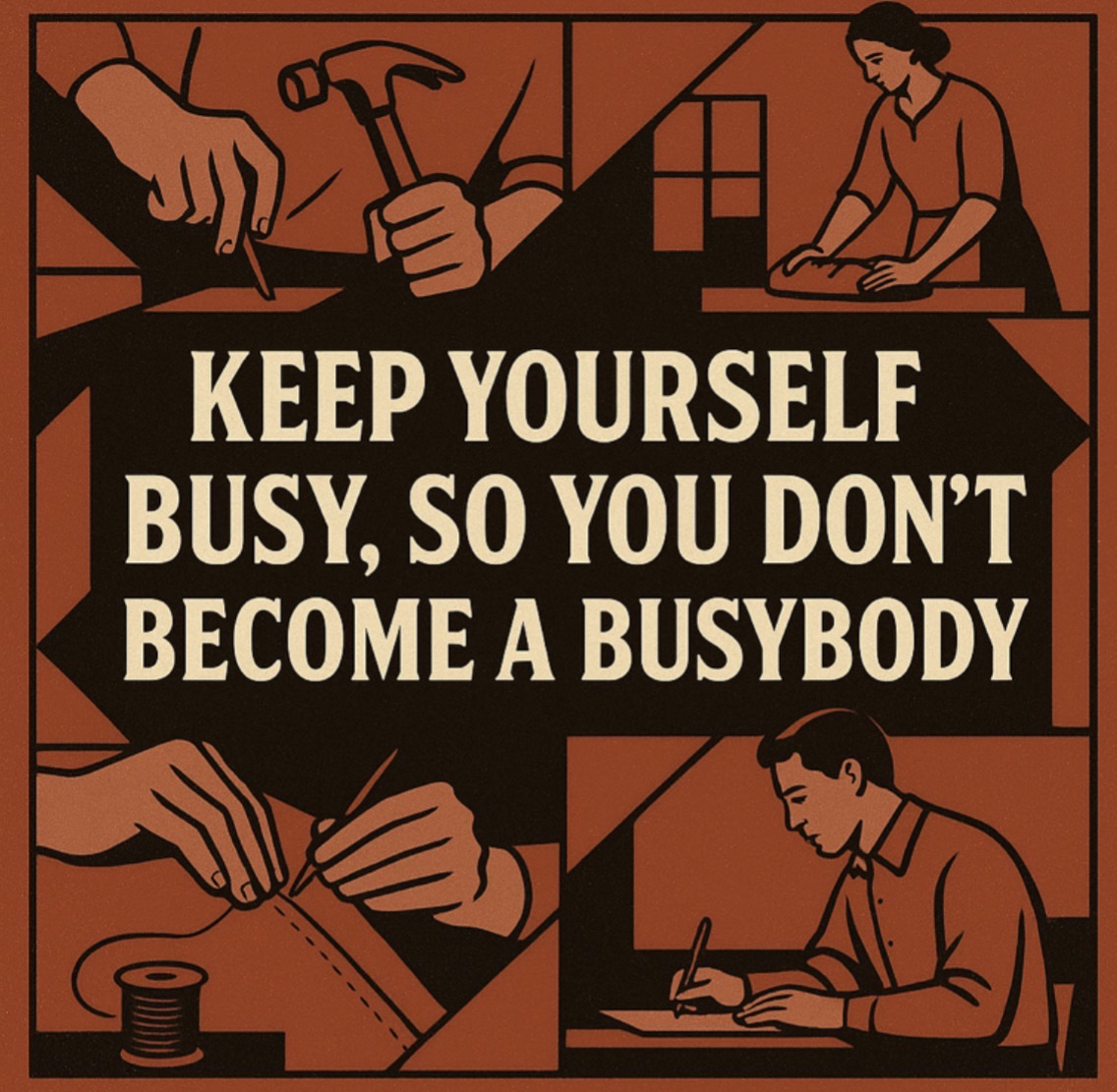
When Paul wrote his second letter to the church in Thessalonica, he was dealing with a growing problem. Some of the believers had misunderstood his teaching about the Lord’s return. They thought Jesus was coming back so soon that work no longer mattered, so they quit their jobs, started depending on others for food, and spent their days meddling in everyone else’s business. Paul saw the danger in this attitude, it not only hurt their testimony but also burdened the faithful workers. So in 2 Thessalonians 3:6–14, he gave clear, practical instruction about how believers should handle idleness and maintain order in the church.
2 Thessalonians 3:6–14
6 Now we command you, brethren, in the name of our Lord Jesus Christ, that ye withdraw yourselves from every brother that walketh disorderly, and not after the tradition which he received of us.
7 For yourselves know how ye ought to follow us: for we behaved not ourselves disorderly among you;
8 Neither did we eat any man’s bread for nought; but wrought with labour and travail night and day, that we might not be chargeable to any of you:
9 Not because we have not power, but to make ourselves an ensample unto you to follow us.
10 For even when we were with you, this we commanded you, that if any would not work, neither should he eat.
11 For we hear that there are some which walk among you disorderly, working not at all, but are busybodies.
12 Now them that are such we command and exhort by our Lord Jesus Christ, that with quietness they work, and eat their own bread.
13 But ye, brethren, be not weary in well doing.
14 And if any man obey not our word by this epistle, note that man, and have no company with him, that he may be ashamed.
Paul’s message can be summed up in four simple lessons.
First, separate from the disorderly. Paul commands believers to “withdraw yourselves from every brother that walketh disorderly.” The word “disorderly” means walking out of rank, like a soldier stepping out of line. Some in the church were living off others instead of following the teaching they had received. Paul says not to encourage or enable that kind of life. Withdrawing doesn’t mean being cruel or unkind, but it does mean setting clear boundaries. Fellowship should strengthen godliness, not support laziness.
Second, set the right example. Paul reminds them that he and his team worked “night and day” so they wouldn’t be a burden. Though he had the right to live off the support of the church, he refused, showing them that Christian living includes hard work and humility. Philippians 3:17 reinforces this: “Brethren, be followers together of me, and mark them which walk so as ye have us for an ensample.” Example speaks louder than opinion. The best way to inspire diligence in others is to live it yourself. Don’t just tell people how to live, show them.
Third, stop the disorder and start the doing. Paul gives a direct command: “If any would not work, neither should he eat.” God never rewards laziness. The idlers in Thessalonica were not working at all, but they had plenty of time to gossip. Paul tells them to “work with quietness, and eat their own bread.” Proverbs 14:23 adds, “In all labour there is profit: but the talk of the lips tendeth only to penury.” The cure for idleness is responsibility. Busy hands build peace; idle hands invite trouble.
Fourth, stay steady in doing right. Paul encourages those who were faithfully serving not to grow weary. “But ye, brethren, be not weary in well doing.” It’s easy to get discouraged when others take advantage or when lazy people seem to get by without effort. But God sees faithfulness, and He rewards those who keep doing good. For those who refuse correction, Paul says to “note that man, and have no company with him, that he may be ashamed.” This isn’t punishment but loving discipline meant to bring repentance. Galatians 6:9 reminds us, “Let us not be weary in well doing: for in due season we shall reap, if we faint not.”
These four truths form a pattern worth remembering: Separate, Set, Stop, Stay. Separate from disorder, set the right example, stop idleness and start doing, and stay steady in what is right. The gospel doesn’t only call us to believe but also to behave. A believer’s testimony is not built on words alone but on a life of faithful work, quiet obedience, and steadfast goodn