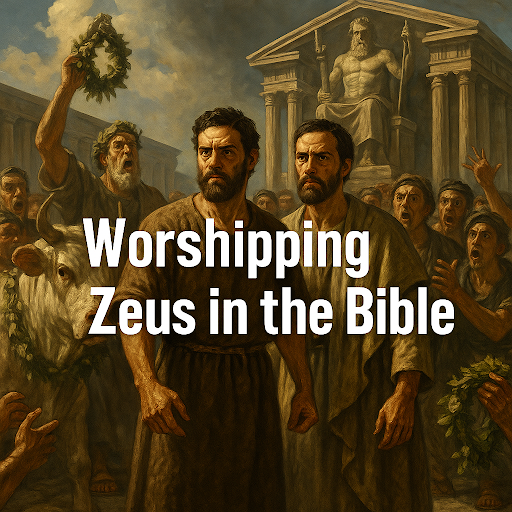
Acts 14:13 “Then the priest of Jupiter, which was before their city, brought oxen and garlands unto the gates, and would have done sacrifice with the people.”
Acts 14:13 gives a peak look at what life felt like in the first-century world. It is easy to read past it, but the scene in Lystra shows how people thought, how they worshipped, and how far they stood from the true God.
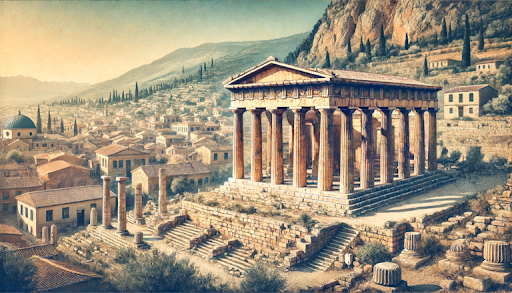
Lystra was not a big educated city like Athens. It was a small Roman town where idols were part of daily life. The temple of Jupiter sat right at the front gate. Anyone entering or leaving walked by it. Their worship shaped how they looked at the weather, their safety, and their harvest.
The Roman name Jupiter is the same god the Greeks called Zeus. The Romans copied much of Greek religion, so Jupiter and Zeus were the same figure in different languages. That means the people in Lystra were not doing anything new. They were following an old pagan system that stretched across the whole empire.
So when Paul healed a crippled man, the people did not think about the God of heaven. They only saw what they already believed. They thought Jupiter and Mercury, or in Greek terms Zeus and Hermes, had come down as men.
They called Barnabas “Jupiter” and Paul “Mercurius”. It sounds foolish to us, but they grew up on tales about the gods walking around in disguise. When they saw a miracle, they filled in the blanks with old myths.
Their worship was driven by fear. They never knew what their gods wanted. They only guessed. Then they offered sacrifices, hoping to stay safe. That is what the fruit of worship looks like without revelation. When men do not know the living God, they invent one and then try to keep him happy.
This is the world the gospel stepped into. A world with many gods, no truth, and people trying to find their way in the dark.
In the Roman world, the priests of Jupiter played a role in public life. Cities believed their god protected them, so a priest held real influence. When he brought oxen and garlands to sacrifice, he was doing his duty for the city, not just the temple.
Rome mixed power and worship together. The gospel did the opposite. It taught that God’s truth stands whether a king approves it or not.
When that crowd saw the power of God through Paul and Barnabas, they bowed to the messengers instead of the One who sent them. Rome worshipped emperors. They built temples for heroes. Lystra just did what their culture trained them to do.
Nothing has changed. People still lift up men. They chase talent, money, fame, and put it on a pedestal. The heart loves what it can see and touch, but that always leads to trouble.
The gospel stood against the culture
Paul and Barnabas tore their clothes because this was not a small mix-up. These people were trying to give them worship that belonged only to God. Any pagan priest would have taken the praise. A Christian preacher refuses it.
That was the difference in the first century. Christianity did not blend in. It confronted the world’s idols, its pride, and its broken ideas about God.
Acts 14:13 shows a world full of superstition, man-worship, and confusion about God. It shows priests with political influence, towns tied to idols, and people quick to follow emotion over truth. Into that mess walked the gospel, clear and sharp, calling men to the living God who made heaven and earth.
The world still leans toward idols. The gospel still calls men out of them.