Luke 14:28, “For which of you, intending to build a tower, sitteth not down first, and counteth the cost, whether he have sufficient to finish it?”
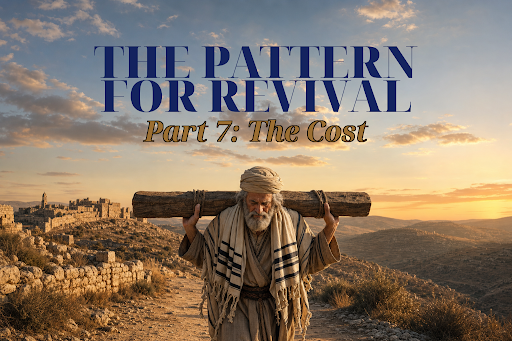
Revival is free in the sense that we cannot earn it, manufacture it, or buy it. God sends it as a gift. But revival is never free in the sense that nothing changes when it arrives. It always costs something. Every man and every people who has ever tasted a real moving of God has paid a price for it before and a price for it after it.
Modern preaching has tried to sell us a Christianity with no cost. Just walk an aisle, sign a card, raise a hand. Jesus never preached that way. He stopped a crowd one day and told them to sit down and count the cost before they followed him. Real revival has a price tag and the price has to be paid.
The Cross Was the First Cost
Every drop of revival that has ever fallen on this earth was bought and paid for on a hill outside Jerusalem two thousand years ago. The river of life flows out of a pierced side.
Isaiah 53:5, “But he was wounded for our transgressions, he was bruised for our iniquities: the chastisement of our peace was upon him; and with his stripes we are healed.”
Everything we will ever give him is a small return on what he gave us.
Fasting and Brokenness Before God
Fasting has been part of every great moving of God in the Bible.
Joel 2:12-13, “Therefore also now, saith the LORD, turn ye even to me with all your heart, and with fasting, and with weeping, and with mourning: And rend your heart, and not your garments, and turn unto the LORD your God: for he is gracious and merciful, slow to anger, and of great kindness, and repenteth him of the evil.”
Turn with fasting, weeping and mourning. The heart must be torn just like the garments.
That is what God called Judah to when revival was the last hope. The body is told to be quiet so we can hear from God.
Acts 13:2-3, “As they ministered to the Lord, and fasted, the Holy Ghost said, Separate me Barnabas and Saul for the work whereunto I have called them. And when they had fasted and prayed, and laid their hands on them, they sent them away.”
The first missionary journey of the church was launched out of a fast. Antioch was not eating and the Holy Spirit was speaking. There is a connection. When the Christian is too full to be hungry, we are too full to hear.
Fasting is a way of saying, “God, I want you more than I want this meal.”
The Suffering of God’s Servants
Revival has never come cheap to the men who carried it. John the Baptist lost his head for it. He preached repentance in the wilderness, the people came, and a king cut off his head over dinner. He saw the Lamb of God before he died, but he died alone in a prison cell.
Stephen was stoned for it. He preached one of the greatest sermons in the Bible to the religious council, and they killed him in the street. The Bible says he saw heaven open and Christ standing at the right hand of God.
Paul was beaten, imprisoned, shipwrecked, stoned, hungry, and finally executed for it. He wrote half the New Testament from prison cells. He kept the faith, and finished the course. And he paid for it.
The Ephesians, when revival came, burned fifty thousand pieces of silver worth of magic books in a public fire. That was a year’s wages for fifty men. They watched their savings turn to ash because they had found something worth more.
2 Timothy 3:12, “Yea, and all that will live godly in Christ Jesus shall suffer persecution.”
There is no godly Christian who does not pay a price somewhere. Revival multiplies the cost because it multiplies the godliness. Real revival never made anybody more comfortable in the world. It made them less comfortable in the world and more at home with Christ.
Real Revival Hurts Before It Heals
There is a hurt that comes before the healing. The plowman hurts the ground before the harvest comes out of it. The doctor cuts the patient before the disease leaves the body. The Holy Spirit wounds the soul before he comforts it.
Hosea 6:1, “Come, and let us return unto the LORD: for he hath torn, and he will heal us; he hath smitten, and he will bind us up.”
The tearing comes first and healing comes after. The Spirit of God breaks the heart before He binds it. He convicts before he comforts. He brings us face to face with our sin before he brings us face to face with our Saviour.
We often want the healing without the hurt. We want the harvest without the plow. It does not work that way. Revival hurts before it heals.
The Cost of Carrying It After
The Ephesians, after their bonfire, had to live the rest of their lives in a pagan city without their old gods. The disciples, after Pentecost, were beaten and scattered. Asa, after his great revival, had a war with Zerah the Ethiopian and a million-man army. Hezekiah, after his cleansing of the temple, had Sennacherib at the gates of Jerusalem.
Revival does not retire God’s people, it enlists them. The cost of carrying revival forward is sometimes higher than the cost of getting it in the first place.
What This Means for Us
Count the cost. That is what Jesus said and that is what we have to do. What is it going to cost us to see revival in our home? In our church? In our city? It might cost us a friendship. It might cost us a job. It might cost us a hobby that has been competing with God. It might cost us a reputation we have been protecting. It might cost us comfort and convenience and the right to sleep in on Sunday.
It will definitely cost us our pride.
Read the next blog. Revival is paid for by individuals but it is carried by a people.