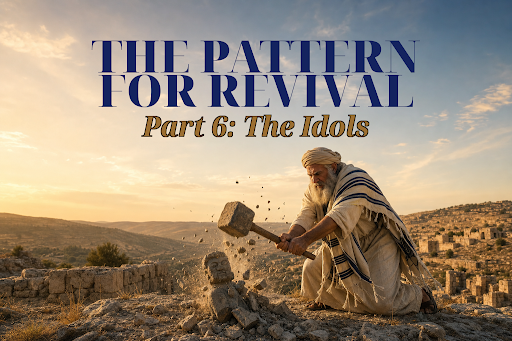
2 Chronicles 31:1, “Now when all this was finished, all Israel that were present went out to the cities of Judah, and brake the images in pieces, and cut down the groves, and threw down the high places and the altars out of all Judah and Benjamin, in Ephraim also and Manasseh, until they had utterly destroyed them all.”
When a Christian gets right with God and the Spirit of God moves in their heart, the next thing that always happens in revival is that something gets torn down.
Every revival in the Bible reached the moment where somebody had to do something with the old gods. Asa cut down his grandmother’s idol and burned it at the brook Kidron. Hezekiah broke the brasen serpent because the people were burning incense to it. Josiah ground the idols to powder. The Ephesians burned fifty thousand pieces of silver worth of magic books in a public fire after the gospel came to their city.
Christ Is the Only One Worthy of Worship
Before we talk about what comes down, we have to talk about who stands up. Every idol exists because somebody is giving worship to a thing that does not deserve it. And every idol falls when the One who does deserve it takes His rightful place.
Colossians 1:18, “And he is the head of the body, the church: who is the beginning, the firstborn from the dead; that in all things he might have the preeminence.”
In all things he might have the preeminence. Christ is to have first place in everything. Not a shared place, or top-three spots. The preeminent place. When he gets it, the idols have no room left to stand.
Philippians 2:10-11, “That at the name of Jesus every knee should bow, of things in heaven, and things in earth, and things under the earth; And that every tongue should confess that Jesus Christ is Lord, to the glory of God the Father.”
The God who broke every idol in Egypt at the Exodus is the same God who is going to break every idol in the whole earth one day at the name of his Son. Revival is just an early taste of that final day. It is heaven leaning down into a house and saying, “Bow now.”
Repentance Is Acted On, Not Just Spoken
Talk is the cheapest currency in God’s economy and the Lord has never been impressed by it. He looks for fruit.
Matthew 3:8, “Bring forth therefore fruits meet for repentance.”
John the Baptist did not say bring forth a verbal apology, he demanded fruit or visible change. Something the world around us can see and verify.
Paul preached the same in Acts 26:20, that men should repent and turn to God and then do works meet for repentance. There is a doing that proves the turning.
In real revival the morning of broken hearts becomes the afternoon of broken idols.
- Phone habits changed
- Friendship circles shifted
- Bottles get poured down the sink
- Subscriptions get cancelled
- Bank accounts get adjusted
There is a sound of breaking and burning all over the camp because Christ has finally been given his throne.
Compromised Altars Come Down First
The first place a revival has to clean is the place where worship has been mixed. Ahaz built a Damascus altar in the temple and pushed God’s altar to the side. Solomon built high places for the gods of his wives on the hill across from Jerusalem. Every generation has had its mixed altar and every revival has torn it down.
2 Chronicles 14:3-4, “For he took away the altars of the strange gods, and the high places, and brake down the images, and cut down the groves. And commanded Judah to seek the Lord God of their fathers, and to do the law and the commandment.”
Asa cleared the idols before he called for the seeking. We cannot seek God on top of an altar to somebody else. Hezekiah went even further and broke the brasen serpent Moses had made because the people had turned it into an idol.
Even a good thing that has become an object of worship has to come down. He called it Nehushtan, which means “a piece of brass.” That is what every idol becomes once it has been seen for what it really is.
The altar of our heart must not have any competing “small g” gods. We must wipe the altar clean.
The High Places and the Pet Sins
The high places were the personal favorites. The little hilltops where people kept their private idols. Every king in Judah is rated by what he did with the high places. Some left them up and some tore them down. The pattern is the same in every personal revival. There are public sins and there are private sins, and revival does not stop until both are dealt with. Josiah took down high places that had been standing since Solomon’s day, three hundred years of religious clutter, and he broke it all.
Hebrews 12:1-2, “Wherefore seeing we also are compassed about with so great a cloud of witnesses, let us lay aside every weight, and the sin which doth so easily beset us, and let us run with patience the race that is set before us, Looking unto Jesus the author and finisher of our faith; who for the joy that was set before him endured the cross, despising the shame, and is set down at the right hand of the throne of God.”
Lay aside every weight and sin which doth so easily beset us. And then notice where our eyes are supposed to go after the laying aside: Looking unto Jesus.
The cross is not just where our sins were paid for. It is where every idol got its death blow. He despised the shame and sat down at the right hand of God. The idols can never compete with that.
Exodus 20:3, “Thou shalt have no other gods before me.”
Matthew 6:24, “No man can serve two masters: for either he will hate the one, and love the other; or else he will hold to the one, and despise the other. Ye cannot serve God and mammon.”
Honoring two masters is impossible and revival is the moment we stop pretending we can. We pick one. And if we pick Christ, the other one has to be removed.
What This Means for Us
What in our lives would have to come down for revival to be real in our homes?
Maybe it is a relationship that should have ended years ago, or a substance we keep promising to quit, or content we watch in private, or a job that requires compromise, or anger we have nursed against someone who hurt us, or money we love a little too much, or a piece of our past that has become an idol of identity.
Whatever it is, it has to come down. Not just labeled and tolerated, it has to come down. Christ will not share his throne with it.
Read the next blog. Idols broken always come at a cost, and revival has always had a price.